
Hair loss: causes, types and treatment
Published Content: Swiss Hair Life editorial team
Medically reviewed by Dr. Sabrina Tahery (Medical Lead Oftringen) and Dr. Moustafa Kassar (Medical Lead Zurich) · Medically updated
Hair loss is common and has many causes. This guide gives you an overview: what is normal, which types there are, when you should have it checked and which treatments are an option.
Short answer: Losing 50 to 100 hairs a day is normal. The most common type is hereditary hair loss, in men and in women. Which treatment helps depends on the cause. That is why diagnosis comes first: with your GP, a dermatologist or in a free hair analysis with us.
Key points at a glance
- Losing 50 to 100 hairs a day is normal.
- Hereditary hair loss is the most common type. It develops slowly: in men at the temples and the crown, in women more often along the parting.
- Diffuse hair loss after stress, fever, surgery or giving birth often only starts two to three months after the trigger and is frequently temporary.
- Sudden, patchy or painful hair loss should be checked by a doctor.
- Medications only work for as long as they are used. A hair transplant is the only treatment that brings hair back to bald areas.
How much hair loss is normal?
Hair falls out and grows back every day. Losing 50 to 100 hairs a day is normal. Hair loss becomes a concern when your hair visibly changes. Take these warning signs seriously:
- Visible thinning patches, such as receding temples or a thinning crown
- Diffuse thinning across the entire scalp
- A widening parting or scalp showing through
- Sudden, heavy hair loss after stress, illness or taking medication
- Round, bald patches
- Redness, flaking, itching or pain on the scalp
You will find a self-test and more about the warning signs in the article Hair loss: normal or a cause for concern?
The most common types of hair loss
Hereditary hair loss
Hereditary hair loss is the most common type, in men and in women. It develops slowly and follows a typical pattern: in men at the temples and the crown, in women more often along the parting. Without treatment, it usually continues to progress slowly. It cannot be cured, because the predisposition remains. It can, however, be treated well and, in many cases, slowed down. Find out more in the article Can hereditary hair loss be treated?
Diffuse hair loss after stress, illness or giving birth
Severe stress, a fever, surgery or giving birth can trigger diffuse hair loss. It is often only noticed two to three months after the trigger and is frequently temporary: once the strain has passed, the hair usually grows back.
Iron deficiency and the thyroid
Iron deficiency and an overactive or underactive thyroid are often investigated as causes of diffuse hair loss. Whether iron deficiency without anaemia triggers hair loss has not been conclusively established. Have your blood levels measured by a doctor before you take any supplements.
Hair loss in women
In women, several causes often come together: a hereditary predisposition that shows mainly along the parting, hormonal changes after giving birth or during the menopause, iron deficiency or thyroid disease. That is why a thorough diagnosis is particularly important before any treatment is planned.
Alopecia areata and scarring hair loss
In alopecia areata, the immune system attacks the hair follicles, leaving round, smooth bald patches. In scarring forms, inflammation destroys the hair follicles permanently. Both forms need dermatological treatment.
Anabolic steroids and testosterone
Whether anabolic steroids or testosterone can trigger hair loss, and what role DHT and your predisposition play, is explained in the article Anabolic steroids, testosterone and hair loss.
The article Possible causes of hair loss gives a detailed overview of all causes.
When should you have hair loss checked?
Have your hair loss checked by a doctor if:
- your hair falls out suddenly or in large amounts,
- round bald patches appear,
- your scalp is red, scaly, burning or painful,
- the hair loss continues for several months,
- other symptoms appear, for example tiredness or changes in weight,
- children are affected.
Your first point of contact is your GP or a dermatologist. They can test your blood if needed, often your iron and thyroid levels.
Which treatment helps with which type of hair loss?
The right treatment depends on the cause:
- Diffuse, temporary hair loss: Treating the trigger comes first; a transplant is usually not necessary.
- Alopecia areata or scarring hair loss: Dermatological treatment.
- Thinning hair with follicles still present: PRP treatment or micrografting can support the existing follicles, and medication prescribed by a doctor can complement them.
- Hereditary hair loss with bald areas: A hair transplant moves your own hair follicles from the back of the head to where hair no longer grows.
Medication
The European S3 guideline names topical minoxidil (for women and men) and finasteride (for men) as effective medications for hereditary hair loss. They only work for as long as they are used. Discuss their use with your doctor. To find out what you should know about minoxidil before and after a hair transplant, read the article What is minoxidil?
PRP and micrografting
Neither treatment requires surgery, and both can support existing hair follicles when hair is thinning. How well they work and who they are suitable for is explained in the articles PRP hair treatment: a useful option for hair loss? and What micrografting can do.
Hair transplant
A hair transplant is the only treatment that brings hair back to bald areas. It makes sense when:
- bald areas have developed, for example receding temples or a bald crown,
- the hair loss has been stable for some time,
- there is enough donor hair at the back of the head,
- your expectations match what is possible with your donor hair.
To find out how many grafts you might need, read the article How many grafts do I need? Whether transplanted hair can fall out again is explained in the article Can transplanted hair fall out again?
How we support you with hair loss
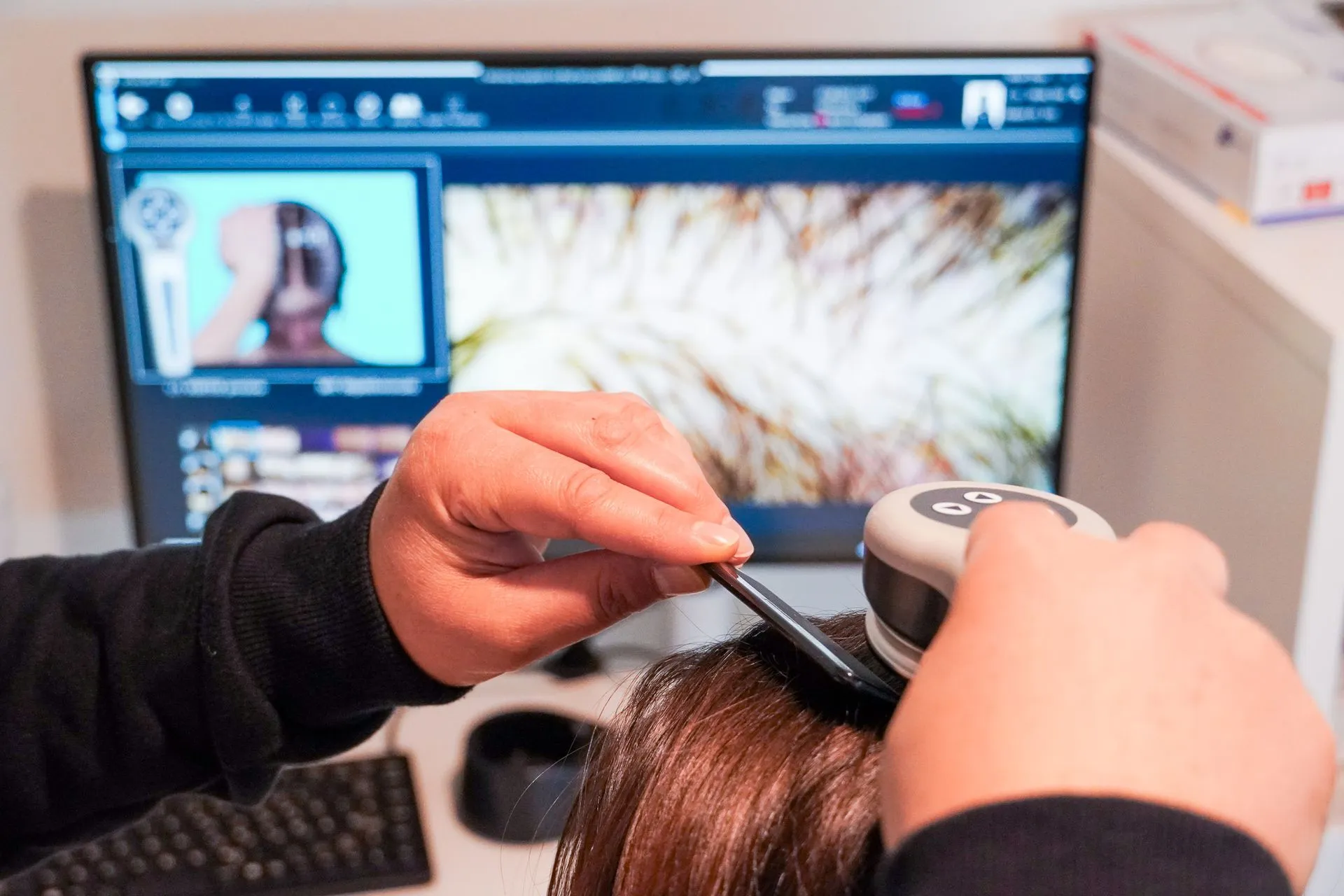
In the free hair analysis, we also examine your scalp using trichoscopy, a highly magnified image of the hair and hair follicles. This shows us whether follicles are shrinking, where the hair is thinning and how much donor hair is available. We tell you openly which treatment is an option and when further medical investigation makes sense first. The hair analysis and the personal consultation in Zurich or Oftringen are free of charge and without obligation.
Start your free hair analysis · Book a consultation
All guides on hair loss
- Hair loss: normal or a cause for concern?: how much hair loss is normal and what the warning signs are.
- Possible causes of hair loss: heredity, stress, iron deficiency, hormones or the thyroid.
- Can hereditary hair loss be treated?: which treatments are proven and what applies to women.
- Anabolic steroids, testosterone and hair loss: how DHT and genetics affect the hair follicles.
- PRP hair treatment: a useful option for hair loss?: what studies show and who it is suitable for.
- Stem cells for hair loss? What micrografting can do: what lies behind micrografting with your own hair follicle tissue.
- What is minoxidil?: what to bear in mind before and after a hair transplant.
- Can transplanted hair fall out again?: what is normal after a hair transplant.
Frequently asked questions
How many hairs a day is it normal to lose?
Losing 50 to 100 hairs a day is normal. It becomes a concern when thinning patches appear, your parting gets wider or a lot of hair suddenly falls out.
Can hereditary hair loss be cured?
No, the predisposition remains. It can, however, be treated well and, in many cases, slowed down. Bald areas can be treated permanently with a hair transplant.
Can stress cause hair loss?
Yes. Severe stress can trigger diffuse hair loss, which is often only noticed two to three months later. Once the strain has passed, the hair usually grows back.
Will my hair grow back on its own?
That depends on the cause. After stress, illness or giving birth, it often grows back on its own. Hereditary hair loss usually continues to progress without treatment, and in scarring forms the hair follicles are permanently destroyed.
Which blood tests make sense for hair loss?
Iron levels and thyroid levels are often tested, and others depending on the situation. Your doctor decides which tests make sense.
How much does the hair analysis at Swiss Hair Life cost?
Nothing. The hair analysis and the personal consultation in Zurich or Oftringen are free of charge and without obligation.
References
- Kanti V, Messenger A, Dobos G, et al. Evidence-based (S3) guideline for the treatment of androgenetic alopecia in women and in men – short version. J Eur Acad Dermatol Venereol. 2018;32(1):11–22.
- van Zuuren EJ, Fedorowicz Z, Schoones J. Interventions for female pattern hair loss. Cochrane Database Syst Rev. 2016.
- Harrison S, Bergfeld W. Diffuse hair loss: its triggers and management. Cleve Clin J Med. 2009;76(6):361–367.
- Rebora A. Telogen effluvium: a comprehensive review. Clin Cosmet Investig Dermatol. 2019.
- Trost LB, Bergfeld WF, Calogeras E. The diagnosis and treatment of iron deficiency and its potential relationship to hair loss. J Am Acad Dermatol. 2006;54(5):824–844.
- Austrian health portal (in German): Haarausfall