
Can transplanted hair fall out again?
Published Last updated Content: Swiss Hair Life editorial team
Medically reviewed by Dr. Sabrina Tahery (Medical Lead Oftringen) and Dr. Moustafa Kassar (Medical Lead Zurich) · Medically updated
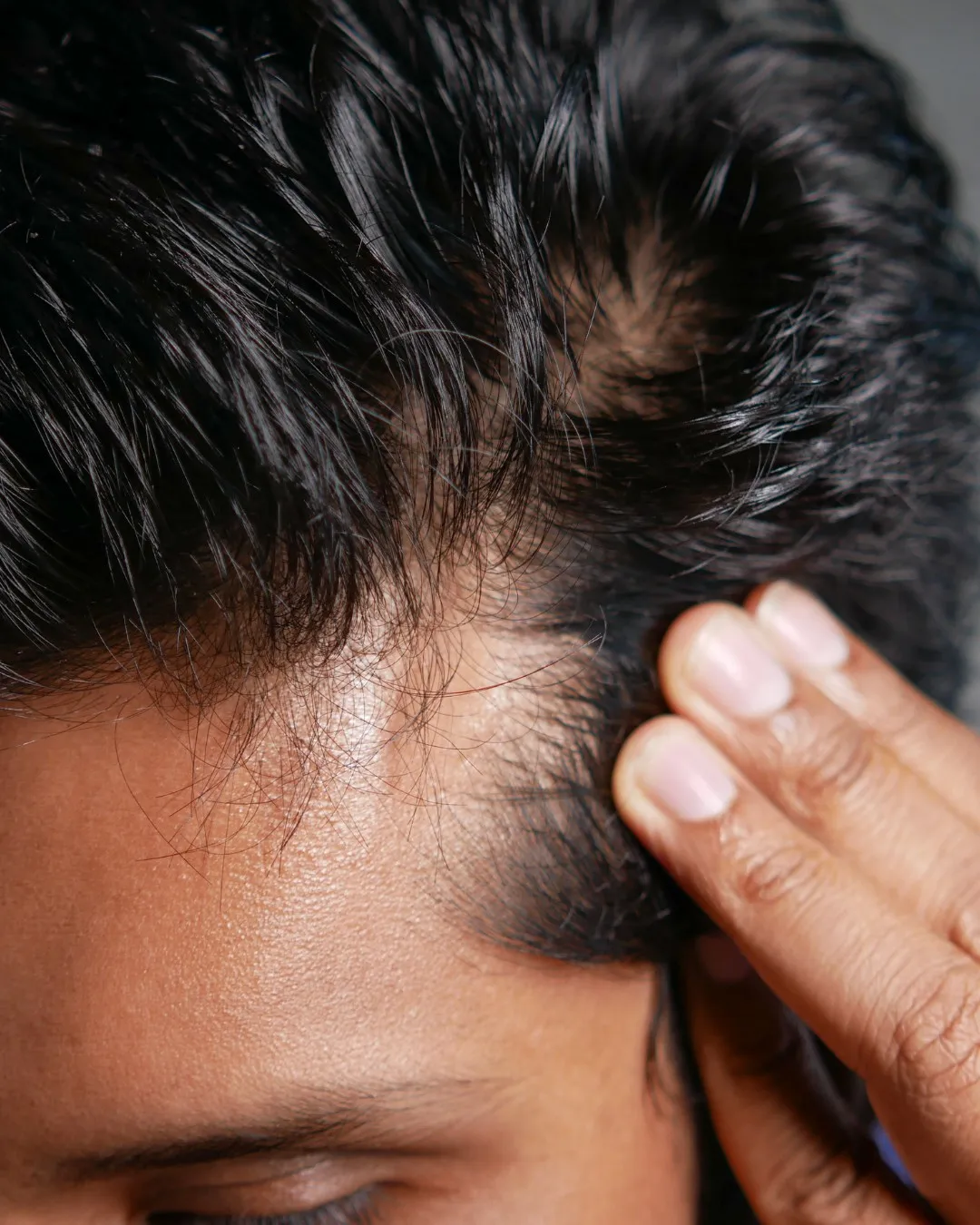
Our patient Daniel described exactly this in his Google review in early November 2025 (translated from German): “… But after a month, the hairs were no longer all the same length and there were what looked like gaps in some places, so I found myself asking whether it was now even ‘patchier’ than before. But another month later, I noticed that the hairs were still there and were simply growing back shorter. Now, after almost four months, the hair has been trimmed evenly to about 2 cm and it already looks really appealing, with an even density.”
He knows that this is a normal process, yet he still worries whether all the hair will grow back. Experiences like this unsettle many people, but they also show how important it is to understand how transplanted hair works and what can affect its growth.
Short answer: Transplanted hair falls out temporarily in the first few weeks after the procedure. This is normal: the hair follicles remain in the skin and produce new hairs after a few months. After that, the hair usually grows permanently, because it comes from an area that hardly reacts to the hormone DHT. Your own, non-transplanted hair, however, can continue to fall out.
Key points at a glance
- Around 2 to 4 weeks after the procedure, the transplanted hairs fall out temporarily. The hair follicles remain intact.
- After around 3 to 4 months, the new hair starts to grow; after 6 to 9 months, the difference is usually clearly visible.
- The final result can be assessed after around 12 to 18 months.
- Transplanted hair comes from the donor area at the back of the head and usually grows permanently.
- Your existing hair can continue to thin. That is why long-term planning is part of every hair transplant.
Many patients are unsure about this topic. With this article, we want to bring clarity to the whole hair transplant process: from preparing for the operation and the operation itself to the recovery phase and the growth phase. We would also like to share valuable tips on how you can get the most out of your transplanted hair and care for it well for a lasting good result.
Facts about transplanted hair
Transplanted hair comes from an area that is genetically unaffected by hair loss, usually the back or sides of the head. That is why it usually keeps growing for life. It is also the reason why older or younger men affected by hereditary hair loss often still have full hair in these areas.
Medical note: “Transplanted hair is generally permanent because it comes from a genetically stable area. Nevertheless, factors such as stress, hormonal changes or illness can affect the quality or density of the hair. With the right aftercare and supportive measures, we can keep the result stable in the long term.”
Why is the donor area so important?
In hereditary hair loss, the hair follicles at the forehead and on top of the head are sensitive to the hormone dihydrotestosterone (DHT). They shrink until they no longer produce strong hairs. The hair follicles at the back of the head are usually far less sensitive. When they are transplanted, they keep this property. The dermatologist Norman Orentreich described this effect as early as 1959; it is the basis of every hair transplant.
We assess how much donor hair you have and how suitable it is in the free hair analysis.
Why might hair still fall out?
In very rare cases, transplanted hair may still become thinner or fall out. This can happen with severe, chronic illnesses or with major life changes that put a heavy strain on the body.
Shock loss or genuine hair loss?
Not all hair loss after a hair transplant is a cause for concern. This overview helps you tell the difference:
| Temporary shedding (normal) | Genuine hair loss | |
|---|---|---|
| When | Around 2 to 4 weeks after the procedure | Slowly, over years |
| What | The transplanted hair shafts fall out, sometimes also your own hair in the surrounding area (shock loss) | Your own, non-transplanted hair becomes thinner |
| Hair follicle | Remains intact and produces a new hair | Shrinks until it no longer produces a strong hair |
| Course | New growth after around 3 to 4 months | Usually continues to progress without treatment |
| What to do | Be patient and attend follow-up appointments | Have it checked by a doctor, plan for the long term |
Existing hair can continue to fall out
A hair transplant does not stop hereditary hair loss. Your own hair between and behind the transplanted areas can continue to thin. Years later, this can look as if transplanted hair is missing. That is why we plan the hairline and the distribution of the grafts so that the result looks natural even if hair loss continues, and we discuss whether a complementary treatment makes sense.
Important to know
Freshly transplanted hair is very sensitive to knocks during the first two weeks. Avoid scratching your head with your fingernails or bumping it against anything, as the scalp and hair follicles are very sensitive during this phase. The tiny openings into which the hair follicles were placed have not yet fully closed. If a follicle is damaged or pulled out during this time, the hair can no longer grow back in that spot.
The process after a hair transplant
| When | What happens |
|---|---|
| First few days | Redness, swelling and small scabs are normal. You come to the clinic for a follow-up appointment. |
| Weeks 2 to 4 | The transplanted hairs fall out temporarily. The hair follicles remain in the skin. |
| Months 3 to 4 | The new hair starts to grow, fine at first. |
| Months 6 to 9 | The difference is usually clearly visible. |
| Months 12 to 18 | For many patients, the final result can be assessed. |
PRP (platelet-rich plasma) treatment can be a useful complement. It can support the regeneration of the scalp and existing hair growth. We discuss in the consultation whether it makes sense in your case.
For the recovery day by day, with answers on washing, sleeping and exercise, see our guide What happens after a hair transplant.
When should you contact the clinic?
Get in touch with us if:
- your scalp is very red, hot or swollen, or pus is coming out,
- the pain increases rather than decreases after the first few days,
- you develop a fever,
- grafts have fallen out with bleeding in the first few days,
- you are unsure whether your recovery is normal.
At Swiss Hair Life, follow-up appointments are included in the price. You do not have to wait until your next appointment.
How to support growth and give your hair new strength
- PRP treatments: Can support the regeneration of the scalp and existing hair growth.
- A balanced, healthy diet: Get important nutrients such as iron, zinc, selenium, vitamin D and biotin from your diet.
- Stress reduction: Use relaxation techniques, get enough sleep, exercise regularly and avoid chronic stress.
- Gentle hair care: Follow the care instructions you receive after the procedure and use mild products.
- Minoxidil: We discuss with you whether and from when minoxidil makes sense. Find out more in the article Minoxidil before and after a hair transplant.
Frequently asked questions
Is it normal for transplanted hair to fall out after two weeks?
Yes. Around 2 to 4 weeks after the procedure, the transplanted hair shafts fall out temporarily. The hair follicles remain in the skin and produce new hairs after a few months.
Will all the transplanted hair grow back?
In an internal evaluation of 568 patients over two years, the graft survival rate at Swiss Hair Life was 98%. Your individual result may differ; it depends on factors such as the donor area, the quality of the grafts, the healing process and aftercare.
What is shock loss?
A temporary loss of your own hair in the area around the treated zone after the procedure. This hair usually grows back.
Will I need a second hair transplant later?
That depends on how your own hair loss develops. Some patients decide on a further treatment years later, once their existing hair has become thinner. From the outset, we plan so that the result looks natural even without a second procedure.
Key takeaways
In the vast majority of cases, transplanted hair is permanent. With an understanding of the natural process, the right care, healthy habits and supportive measures such as PRP treatments, you can support your result well. If you would like to know how best to protect your transplanted hair and which supportive measures make sense for you, you are welcome to arrange a personal consultation at our clinic or start the free hair analysis.
References
- Orentreich N. Autografts in alopecias and other selected dermatological conditions. Ann N Y Acad Sci. 1959;83:463–479.
- Liu Y, et al. A scoping review on complications in modern hair transplantation: more than just splitting hairs. Aesthetic Plast Surg. 2024.
- Garg AK, Garg S. Complications of hair transplant procedures: causes and management. 2021.
- Swiss Hair Life: internal evaluation of the graft survival rate (568 patients, two years).