Skip to content
Swiss Hair Life: Baldness is not your destiny!
Sapphire FUE · Zurich & Oftringen

Hair transplant in Switzerland
fixed price from CHF 5’900.–

A natural hairline, with the procedure and aftercare in Switzerland, all from one team. Find out in 2 minutes what is possible for you.

from CHF 250.–/month*
  • 4.8
  • Our own clinic in Switzerland
  • Sapphire FUE
  • Aftercare on site
Step 1 of 4

Where is your hair thinning?

Tap the option that fits best.

or Book an appointment directly

  • Free consultation without obligation
  • Treatment and aftercare in Switzerland
  • Interest-free financing subject to approval
  • Natural-looking results as the treatment goal

14’000+

treatments

98%

graft survival rate*

4.8

from 129 Google reviews

2

Clinics: Zurich & Oftringen

* Internal evaluation of 568 patients over a period of two years.

In brief

What is a hair transplant?

In a hair transplant, your own hair follicles, known as grafts, are taken from the back of the head and placed in thinning or bald areas. Hair follicles from the back of the head are usually much less susceptible to hereditary hair loss and can therefore keep growing in their new place in the long term.

Swiss Hair Life works with Sapphire FUE: the grafts are extracted one by one (FUE), and we open the fine channels for the new hair with sapphire blades. Consultation, procedure and aftercare take place in our clinics in Zurich and Oftringen.

Key facts at a glance

Cost
CHF 5’900.– to CHF 12’900.– fixed price, depending on the number of grafts
Financing
from CHF 250.–/month, 0% interest, 3 to 24 months, subject to approval
Method
Sapphire FUE under local anaesthesia
Duration of the procedure
usually about 6 to 8 hours
Included
consultation, procedure, aftercare and all follow-up appointments
First healing phase
usually 5 to 7 days; mild redness may remain visible for longer
Final result
can be assessed in many patients after about 12 to 18 months
Locations
Zurich-Altstetten and Oftringen (AG)
Results

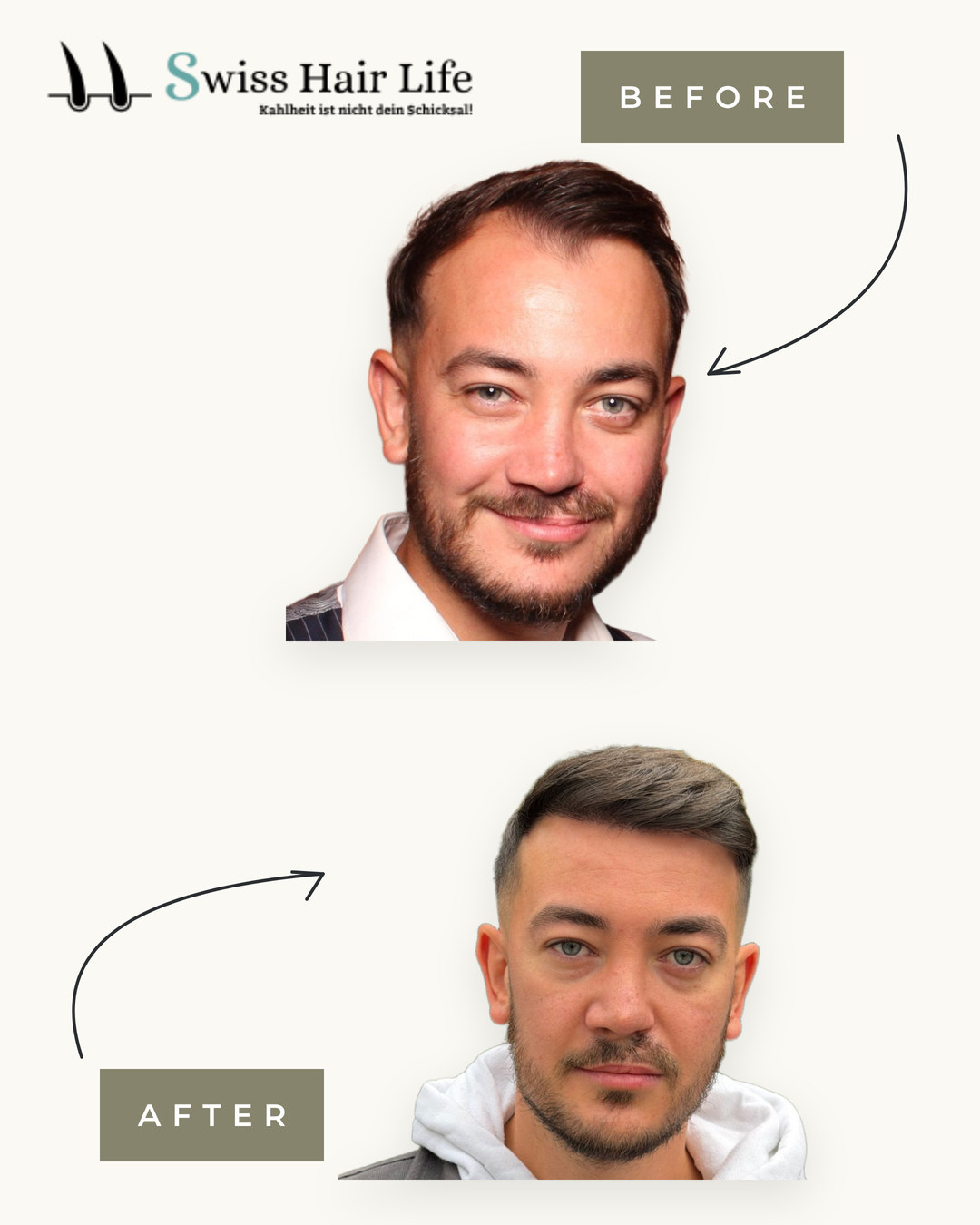
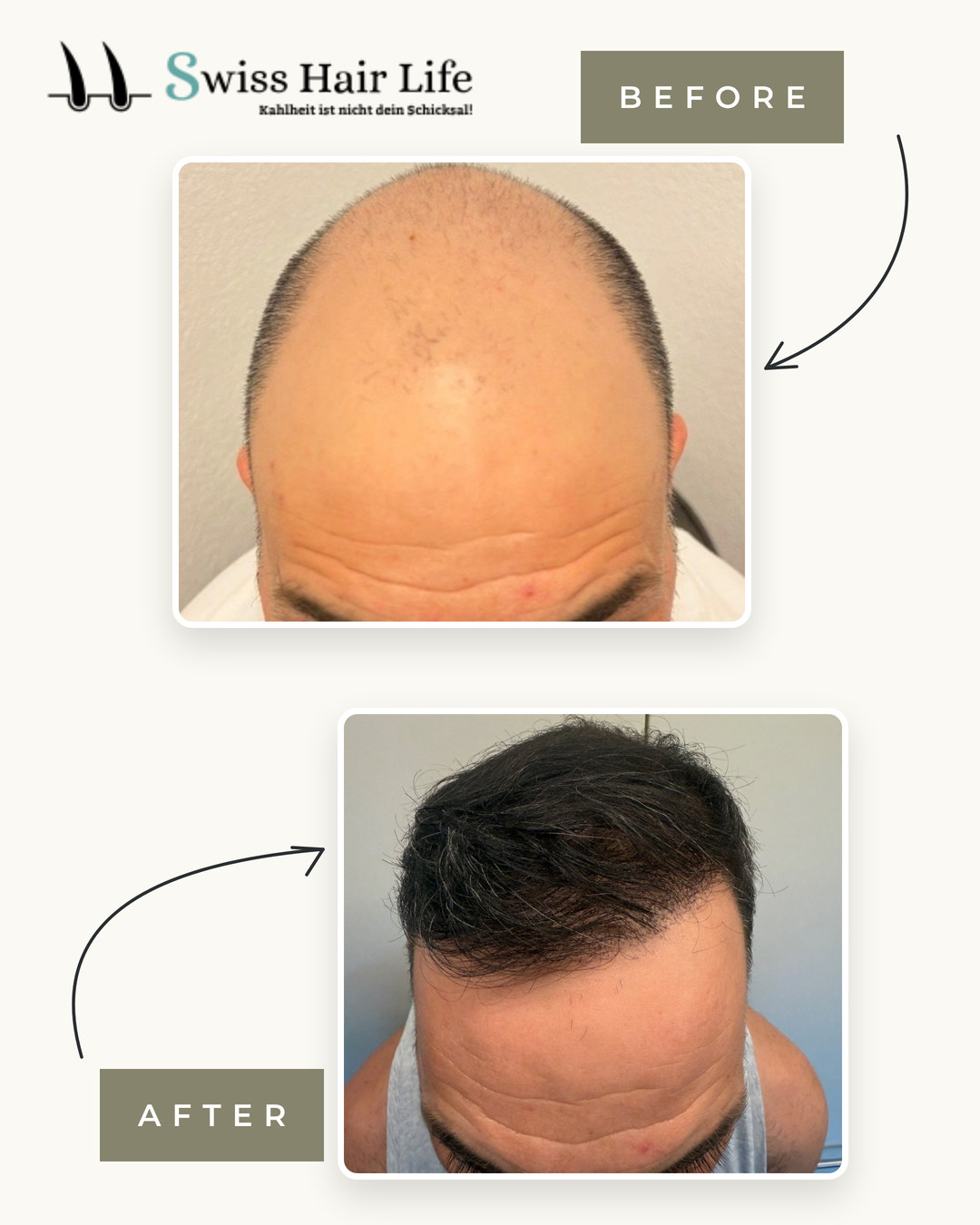
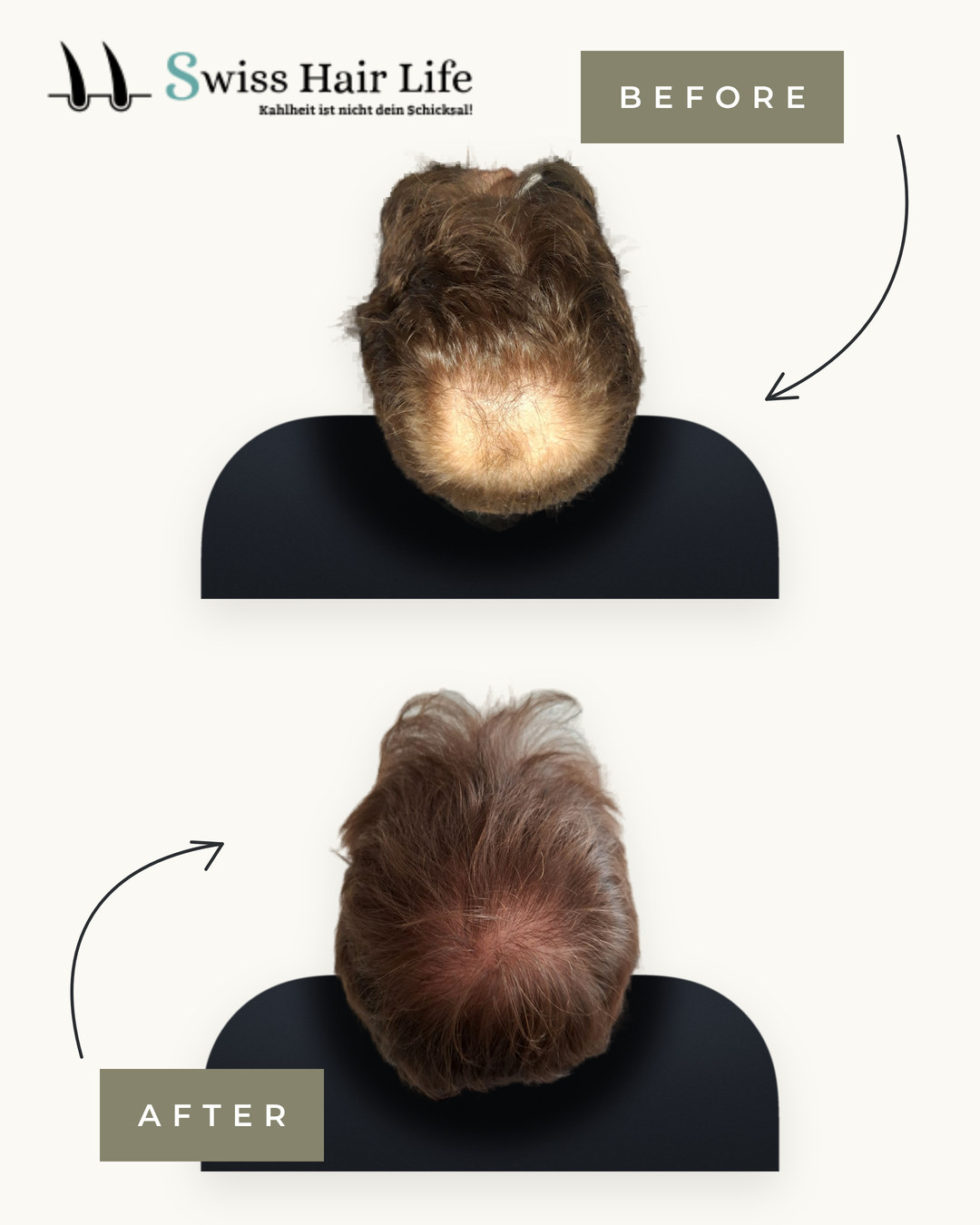
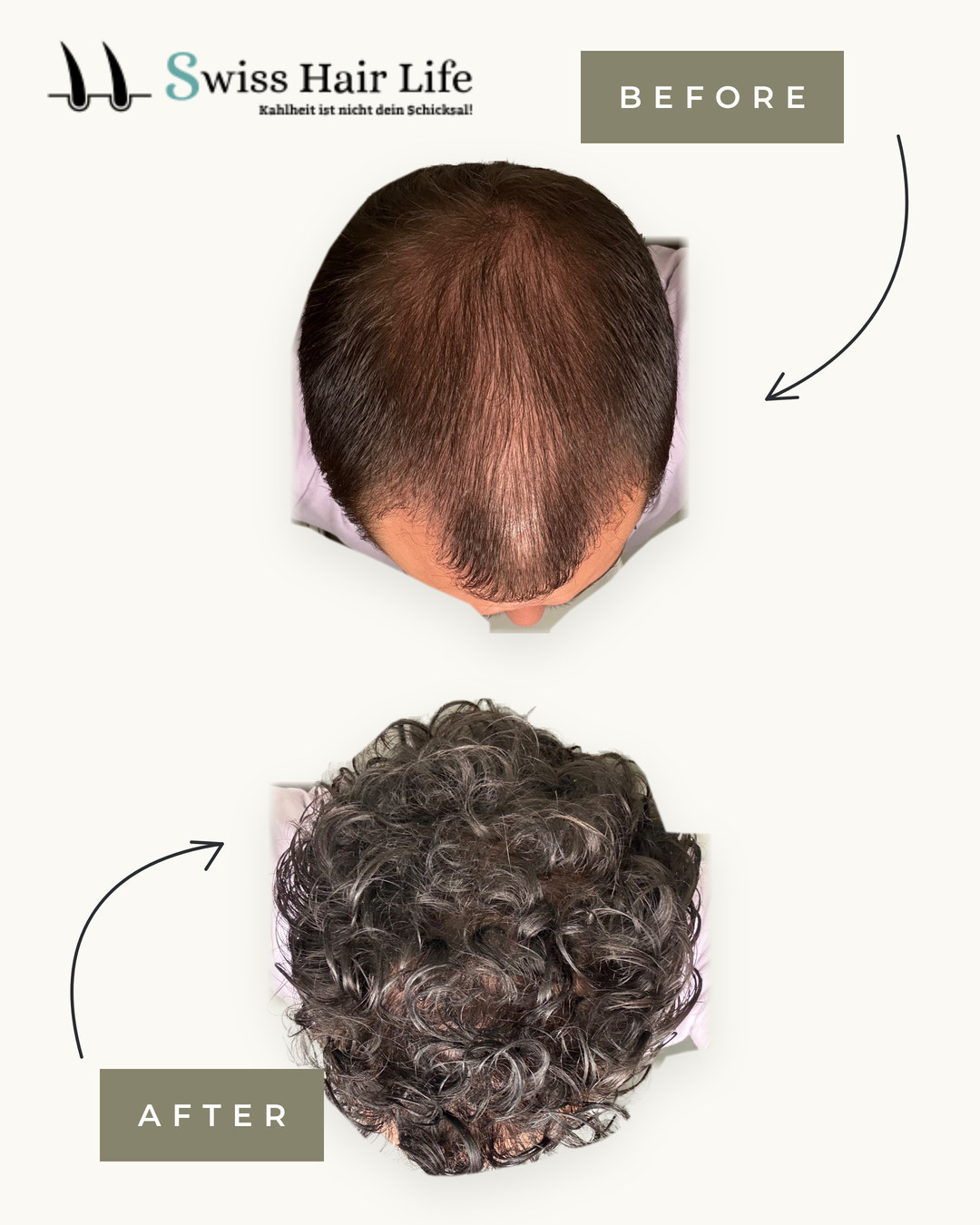
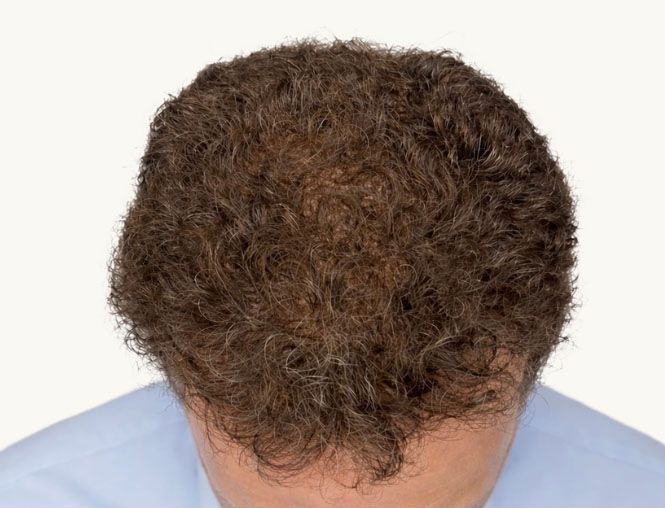
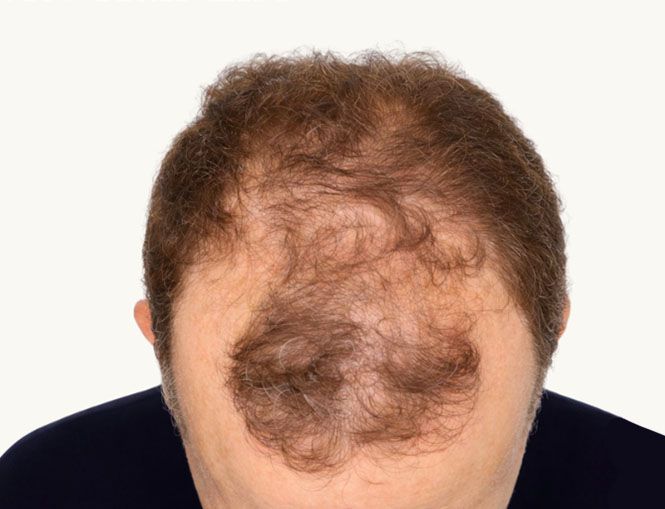
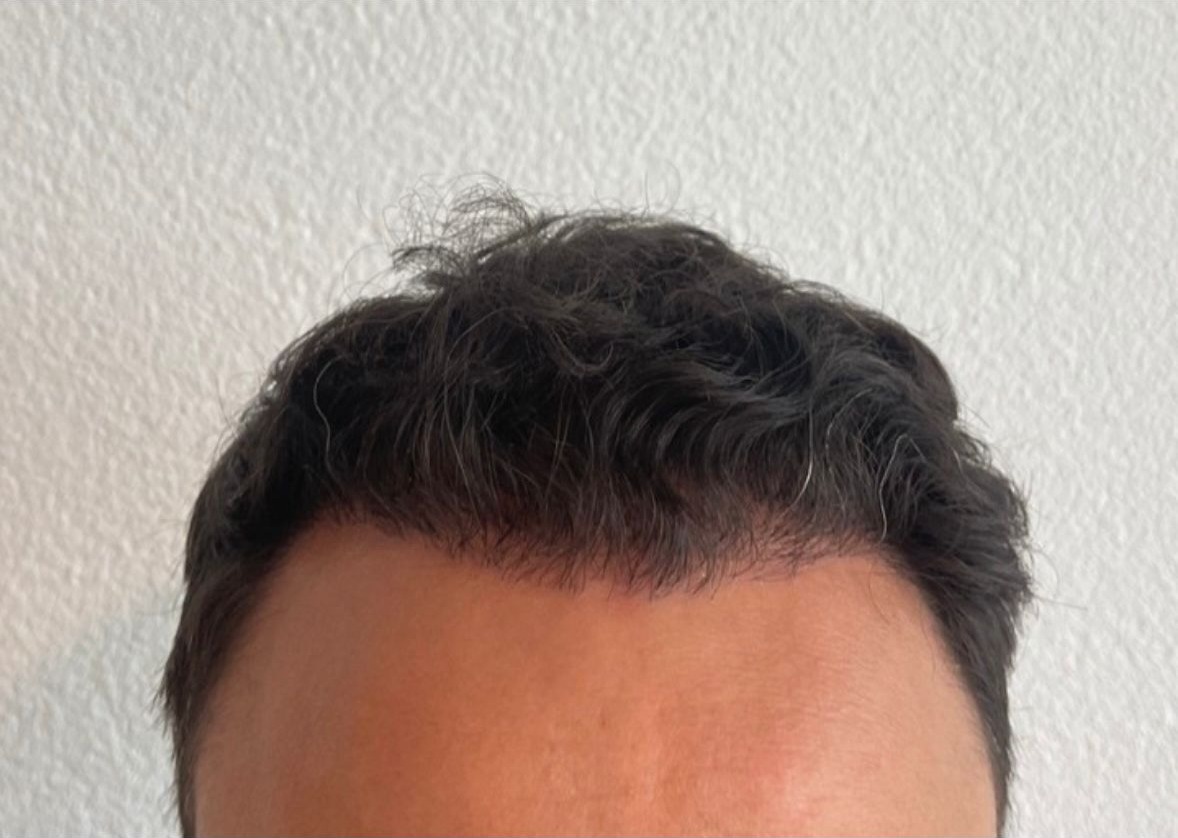
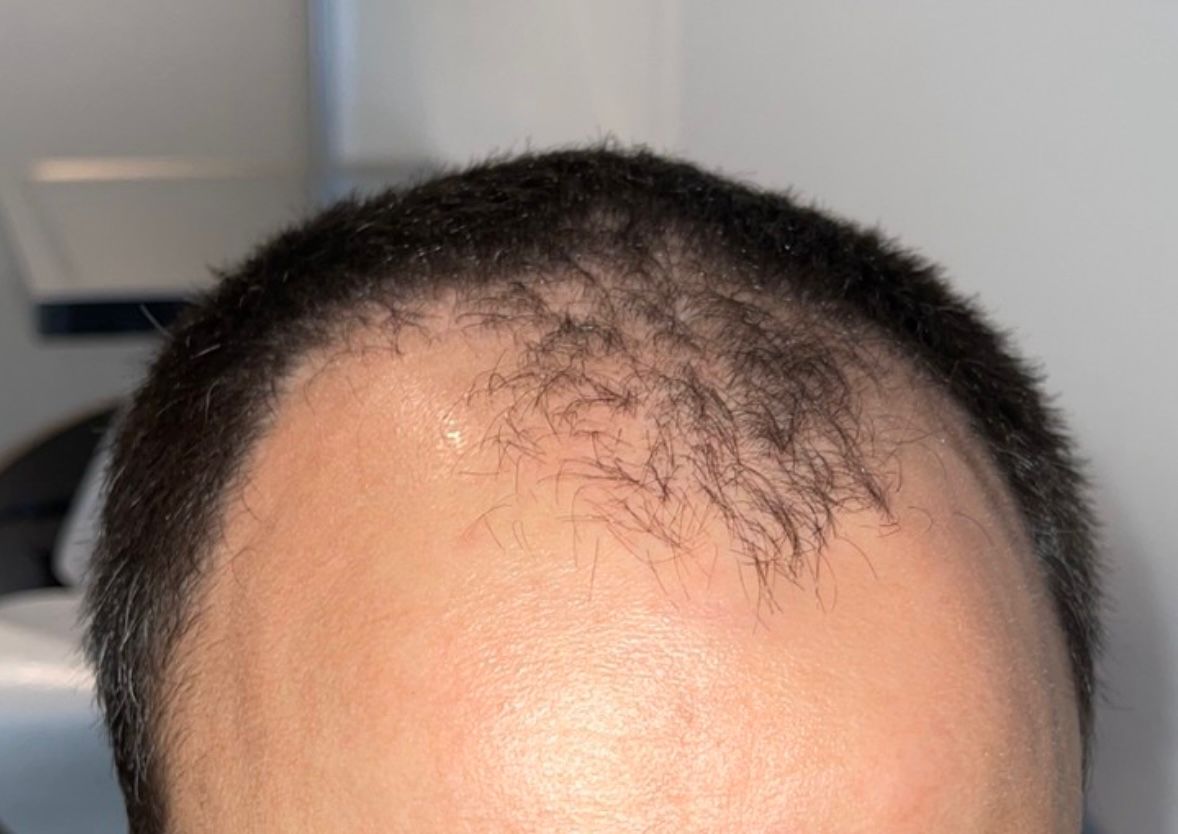
Real before-and-after results

Patients of Swiss Hair Life. Drag the slider to see the difference.

Before and after – Hairline & temples, 2800 grafts
Hairline & temples2800 grafts
Before and after – Front & top of the scalp, 4250 grafts
Front & top of the scalp4250 grafts
Before and after – Crown, 2200 grafts
Crown2200 grafts
Before and after – Temples, top & crown, 2800 grafts
Temples, top & crown2800 grafts
After – Top of the scalp, 3500 grafts
Before – Top of the scalp, 3500 grafts
Before
After
← drag →
Top of the scalp3500 grafts
After – Receding hairline, 2400 grafts
Before – Receding hairline, 2400 grafts
Before
After
← drag →
Receding hairline2400 grafts

Results vary from person to person and depend on factors such as the donor area, hair characteristics and the progression of hair loss. No specific result can be guaranteed.

Start your free hair analysis
Suitability

Is a hair transplant right for you?

Not in every case. We only recommend a hair transplant if it appears medically and aesthetically sensible, and we tell you openly if another treatment is a better fit.

What we check before every recommendation

  • Donor area
  • Cause of the hair loss
  • Progression and course
  • Age
  • Grafts needed
  • Your expectations
  • Long-term planning

Suitable for a hair transplant

  • Receding temples and a receding hairline
  • Thinning crown or top of the head
  • Advanced hair loss: up to 6’000 grafts in two sessions
  • Hereditary hair loss in men
  • Women with a high forehead or bald patches

Where we look at other options first

  • Thinning hair without bald patches
  • Mild or diffuse hair loss
  • Under 25, if the course is still unclear
  • Hair loss that may be hormonal, e.g. with PCOS

First we assess the cause. Depending on the findings, PRP (platelet-rich plasma) treatment can be a non-surgical option: in suitable patients it can support existing hair growth (single session CHF 550.–, 4 sessions CHF 2’000.–). With some causes, a further medical assessment is needed first.

More about PRP hair treatment
Have your suitability checked free of charge

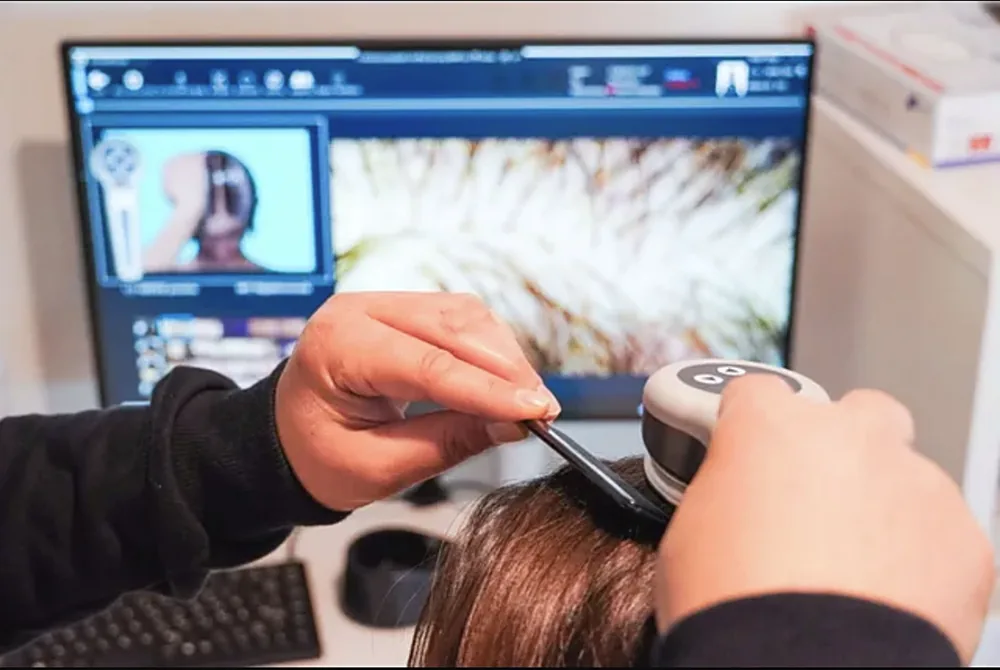
We examine your hair loss and donor area with a trichoscope during the free consultation.

Planning

Good results are created in the planning

Many people look at the bald patch first. For a natural result that still suits you in ten years, we start at the back of the head.

Examination with a trichoscope at Swiss Hair Life in Oftringen

The donor area: your supply of hair

The donor area lies at the back and sides of the head. The hair follicles there are usually much less susceptible to hereditary hair loss than those on the forehead and top of the head. That is why we take the grafts from here.

This supply is limited. Each graft can only be transplanted once, and if too many are taken too densely, the back of the head looks thin. So we only take as many as the donor area can tolerate well, and keep a possible later treatment in mind.

How we assess the donor area

  • Density: how many hair follicles there are per area
  • Grafts with one, two or more hairs
  • Hair thickness and hair structure
  • The area from which grafts can be taken safely

We examine the donor area during the consultation with a trichoscope, a camera with high magnification.

Are more grafts automatically better?

No. The right number depends on the area, the density you want, the capacity of the donor area, the hair thickness and the further hair loss to be expected.

Too many grafts in one session put strain on the donor and recipient areas and use up reserves that are missing later. So we do not plan the largest possible number, but the number needed for a natural result that stays right in the long term.

How do we plan the hairline?

A natural hairline does not only depend on how low it sits. We take into account your age, your facial proportions, the hair loss to be expected and the grafts available.

Right at the front we place single-hair grafts, slightly irregular, at a natural angle and in the direction your hair grows. This creates a soft transition instead of a straight edge. A hairline set too low can look unnatural at 50, so we plan it to suit you, also in many years.

How do we take future hair loss into account?

In many people, hereditary hair loss continues to progress. The transplanted hair is usually unaffected, but your own hair next to it can keep thinning.

So we plan the result to stay balanced even if hair loss continues, and leave reserves in the donor area. Depending on the findings, we also discuss measures that can support your existing hair.

What affects the visible density?

Not only the number of grafts. Thick or wavy hair covers more of the scalp than fine, straight hair. A low contrast between hair colour and skin colour also makes hair look denser.

During the consultation we show you honestly what density is realistic with your hair structure.

One session or two?

We treat up to 3’800 grafts in one session. For larger areas (up to 6’000 grafts), we spread the treatment over two sessions.

This spares the donor and recipient areas and lets us adapt the second session to the result of the first.

What is realistic, and what is not?

A hair transplant redistributes existing hair; it does not create new hair. With advanced hair loss, the donor area is often not enough to make the whole area as dense as it used to be.

What is realistic is a natural frame for the face and a clearly visible improvement where it is most noticeable. After the hair analysis we tell you openly what is possible for you.

Request your own plan

Free, with an assessment of your donor area and the grafts you need.

Our speciality: the hairline

Take a closer look.
Can you spot the transplant?

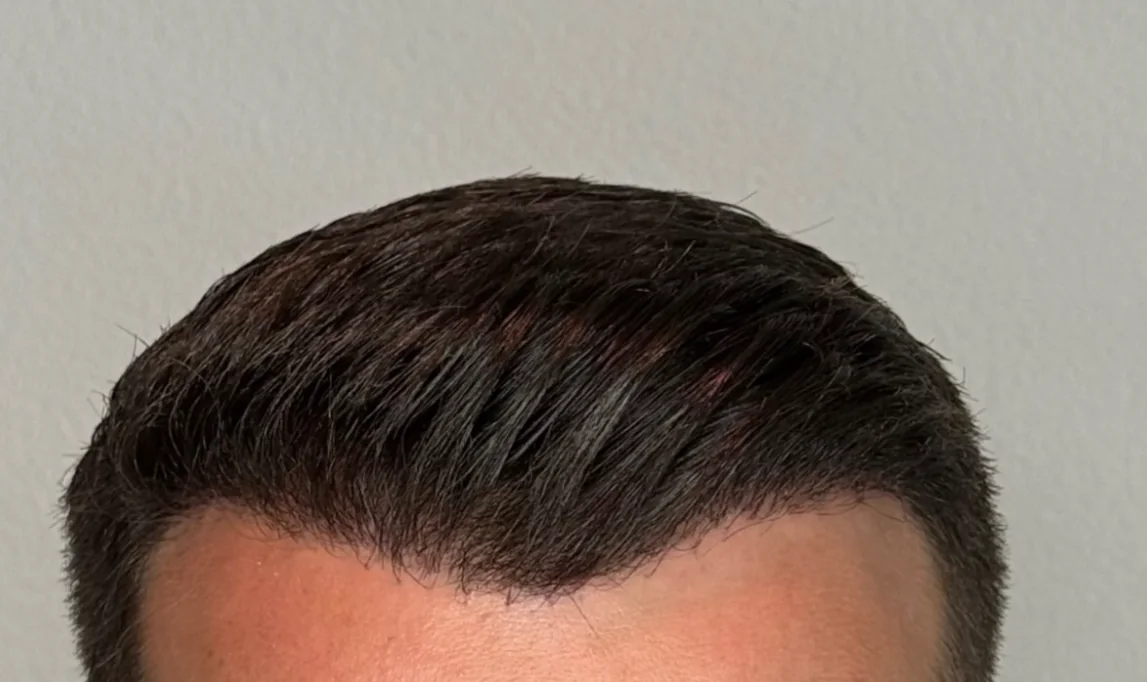
The hairline decides whether a result looks natural – or operated on. That’s why it’s a top priority for us: every graft at the front is placed individually, finely graduated, at a natural angle and tailored to your face.

Hairline after a hair transplant at Swiss Hair Life, Front viewReal result · Swiss Hair Life

Drag the magnifier over the hairline

«The result is impressively natural. The hairline was perfectly reconstructed, and the density is exactly what I had hoped for.»
LLarsGoogle review· Translated from GermanView on Google
  • Single-hair grafts at the frontRight at the front, we only use grafts with a single hair. This creates a soft transition instead of a hard edge.
  • Naturally irregularNo ruler-straight line: subtle irregularities, just like nature makes them.
  • The right angle and directionEvery hair grows forward at a natural angle – so it looks real even when cut short.
  • Your face as the benchmarkWe design the hairline to suit your face shape and age – so it still looks right for many years.
Methods

FUT, FUE, Sapphire FUE or DHI?

A hair transplant consists of two steps: extracting the grafts from the donor area and placing them in the bald or thinning area. The method names describe how one of these steps is carried out.

FUT

Extraction

A narrow strip of skin is removed from the back of the head and divided into individual grafts under the microscope. This leaves a linear scar that is usually hidden by the surrounding hair but can be visible when the hair is cut very short.

FUE

Extraction

The grafts are extracted one by one from the donor area with a fine hollow needle. It leaves no visible scars. FUE only describes the extraction; how the channels are then opened is a separate step.

Our method

Sapphire FUE

Extraction + channels

Extraction with FUE. We open the channels in the recipient area with finely ground sapphire blades: for precise openings at the planned angle and in the natural direction of growth, matched to the size of the grafts. More on this below.

DHI

Placement

The grafts are placed with an implanter pen that opens the channel and places the graft in the same step. The technique is used, for example, for dense placement between existing hairs. Here too, the grafts are usually extracted with FUE.

What determines the result

The name of the method alone does not make a good result. What matters is how well the treatment suits your starting point and how carefully it is carried out:

  • Donor area
  • Planning and hairline
  • Number and quality of grafts
  • Careful handling of the grafts
  • Natural direction of growth
  • Experience of the team
  • Aftercare
  • Your individual circumstances
Find the right treatment
The method

Sapphire FUE: finer than a steel blade

With both methods, the hair follicles are extracted in the same way (FUE). The difference lies in the tool used to open the tiny channels for the new hair.

98%
graft survival rate*
approx. 1.2 mm
fine channels*
5–7 days
first healing phase*
Conventional

Steel blade

Flat blade, wider incision

At Swiss Hair Life

Sapphire blade

Polished sapphire, fine V-shaped incision

Typical channel size

approx. 2.3 mm

Typical channel size

approx. 1.2 mm

First healing phase

usually 10–14 days

First healing phase

usually 5–7 days

Redness

Often visible for longer

Redness

Usually visible for a shorter time

Density

Channels can’t be placed as closely

Density

Denser placement possible

* Graft survival rate: internal evaluation of 568 patients over two years. Channel size and first healing phase: typical values from our practice. No guarantee for the individual case – the result depends on factors such as the donor area, graft quality, healing and aftercare.

Cost

How much does a hair transplant cost in Switzerland?

A hair transplant at Swiss Hair Life costs between CHF 5’900.– and CHF 12’900.–. The price depends on the area and therefore on the number of grafts that make sense for your result.

You receive your price as a fixed price after the hair analysis. It does not change afterwards, and there are no hidden extra costs.

What the price depends on

  • Size of the thinning or bald area
  • Number of grafts: up to 1’500, 2’800, 3’800 or 6’000
  • Density and capacity of the donor area
  • One or two sessions (from 3’801 grafts in two sessions)
  • If you wish: PRP sessions added as a package

Included in the fixed price

  • Hair analysis with a trichoscope and a personal consultation
  • Procedure with Sapphire FUE under local anaesthesia
  • Aftercare and all follow-up appointments at the clinic
  • The same contacts from the consultation to the result

Interest-free instalments

You can pay for the treatment interest-free in 3 to 24 monthly instalments, subject to approval by our financing partner. Example: CHF 5’900.– over 24 months comes to about CHF 250.– per month.

Treatment in Switzerland

With treatment abroad, travel, hotel and organisation costs may be added depending on the provider, and follow-up appointments often mean another trip. At Swiss Hair Life, consultation, procedure and aftercare take place in Switzerland, with the same contacts throughout and short journeys to Zurich or Oftringen.

Switzerland or Turkey? The comparison in our guides
Pricing & financing

Transparent pricing. Flexible financing.

Clear prices for each treatment area – including consultation, procedure and aftercare.

Financing
FromCHF 250.–/ month*

Interest-free financing, subject to approval by our financing partner.

  • 3 to 24 months
  • 0% interest
  • Subject to review and approval by our financing partner

* Financing example: treatment price CHF 4’000.–, term 16 months, interest rate 0%, monthly instalment CHF 250.00, total amount CHF 4’000.–. Available terms: 3, 6, 9, 12, 16, 18 or 24 months. The monthly instalments in the price list are based on a 24-month term and rounded to the nearest CHF 10.–. Financing is subject to a credit check and approval by our financing partner; there is no entitlement to financing. You will receive the binding terms during your consultation.

  • Consultation & procedure
  • Standard aftercare
Existing hairTreatment areaTop view, forehead at the top
Front
orFront
1 Section

Receding hairline OR crown

up to 1’500 grafts

CHF 250.– / month*
Total price CHF 5’900.–
Free analysis
Front
2 Section

Receding hairline AND crown

1’501 – 2’800 grafts

CHF 290.– / month*
Total price CHF 6’900.–
Free analysis
Front
3 Section

Receding hairline AND top of the scalp

2’801 – 3’800 grafts

CHF 370.– / month*
Total price CHF 8’900.–
Free analysis
Front
4 Section

Partial to complete baldness

3’801 – 6’000 grafts

2 sessions within 6 months
CHF 540.– / month*
Total price CHF 12’900.–
Free analysis

Illustrations are for guidance only. Your suitability and the number of grafts required are assessed individually during your free consultation.

What's included?

Consultation, procedure, aftercare and all follow-up appointments are included in our prices.

Support until your final result

We support you with follow-up appointments in Switzerland until your final result.

Clarity before you decide

You'll learn your exact price during your free consultation – with no obligation.

The day of treatment

How the procedure works

Depending on the extent and the number of grafts, a hair transplant at Swiss Hair Life usually takes about 6 to 8 hours. You are awake throughout; the scalp is under local anaesthesia.

  1. Start

    Final discussion

    Your doctor goes through the plan with you once more and draws the new hairline, matched to the shape of your face and your age.

  2. Preparation

    Local anaesthesia

    The hair in the donor area is trimmed and the scalp is numbed with a local anaesthetic.

  3. Extraction

    Extracting the grafts

    The grafts are extracted one by one, sorted by the number of hairs and carefully stored until they are placed.

  4. Placement

    Opening channels and placing grafts

    With the sapphire blade we open fine channels at the planned angle. At the front we place single-hair grafts for a soft transition, behind them grafts with several hairs for density.

  5. Completion

    Aftercare instructions

    You receive your personal aftercare instructions and arrange your first follow-up appointments.

After the procedure

Healing and hair growth: the timeline

Everyone heals a little differently. This is the typical course, and we accompany you at every step with follow-up appointments at the clinic.

  1. Day 1–3

    Take it easy

    Slight swelling on the forehead and a feeling of tightness are possible. Sleep with your head slightly raised.

  2. Up to day 10

    First healing phase

    The small crusts come off when you wash your hair according to our instructions; the first healing phase is usually complete after 5 to 7 days. Mild redness can remain visible for longer.

  3. Week 2–8

    Temporary hair shedding

    The visible shafts of the transplanted hairs often fall out at first. The follicles stay in the skin and later grow new hair. Existing hair in the treated area can also react to the procedure and fall out temporarily (shock loss); in most cases it grows back.

  4. Month 3–4

    New hair

    The new hair starts to grow, fine at first, then stronger.

  5. Month 6–9

    Visible difference

    Density and length increase noticeably.

  6. Month 12–18

    Final result

    In many patients, the final result can now be assessed. The individual course can vary.

When you can do sport, use a sauna or go out in the sun again is set out in your aftercare instructions.

Honest consultation

Treatment only when it truly makes sense

Many people book a hair transplant far too quickly – without knowing whether it’s the right step yet. That’s why, in the first consultation, we clarify these 5 points with every patient:

  1. 1How far the hair loss has really progressed
  2. 2Whether a hair transplant makes sense yet
  3. 3Which alternatives should be considered first
  4. 4How many grafts are realistically needed
  5. 5Which results can actually be achieved

Only then do we recommend a treatment – honestly and transparently.

Start your free hair analysis
Plainly said

Risks and side effects

A hair transplant is a surgical procedure. Serious complications are rare, but as with any procedure there are risks and side effects. We discuss them openly with you before the treatment.

Swelling, redness, crusts

Common in the first few days. Swelling and crusts usually subside within one to two weeks; mild redness can remain visible for longer.

Numbness

Possible for a time at the back or top of the head. It usually resolves within weeks to a few months.

Temporary hair shedding

Transplanted and sometimes also existing hair can fall out temporarily. In most cases it grows back.

Inflammation

Rare. Careful hygiene and following the aftercare instructions reduce the risk.

Uneven density

Can occur and depends heavily on planning and execution. We plan the hairline and density individually and monitor the progress.

Questions about your situation? We answer them in the free consultation.

Free consultation

Personal hair analysis

Your path to natural hair

A few questions, free and without obligation. Our team will get back to you personally with your assessment.

Step 1 of 4

Where is your hair thinning?

Tap the option that fits best.

or Book an appointment directly

Doctors & treatment team

Your treatment team in Switzerland

A hair transplant is precision work. That's why we deliberately work as a small team with many years of experience together.

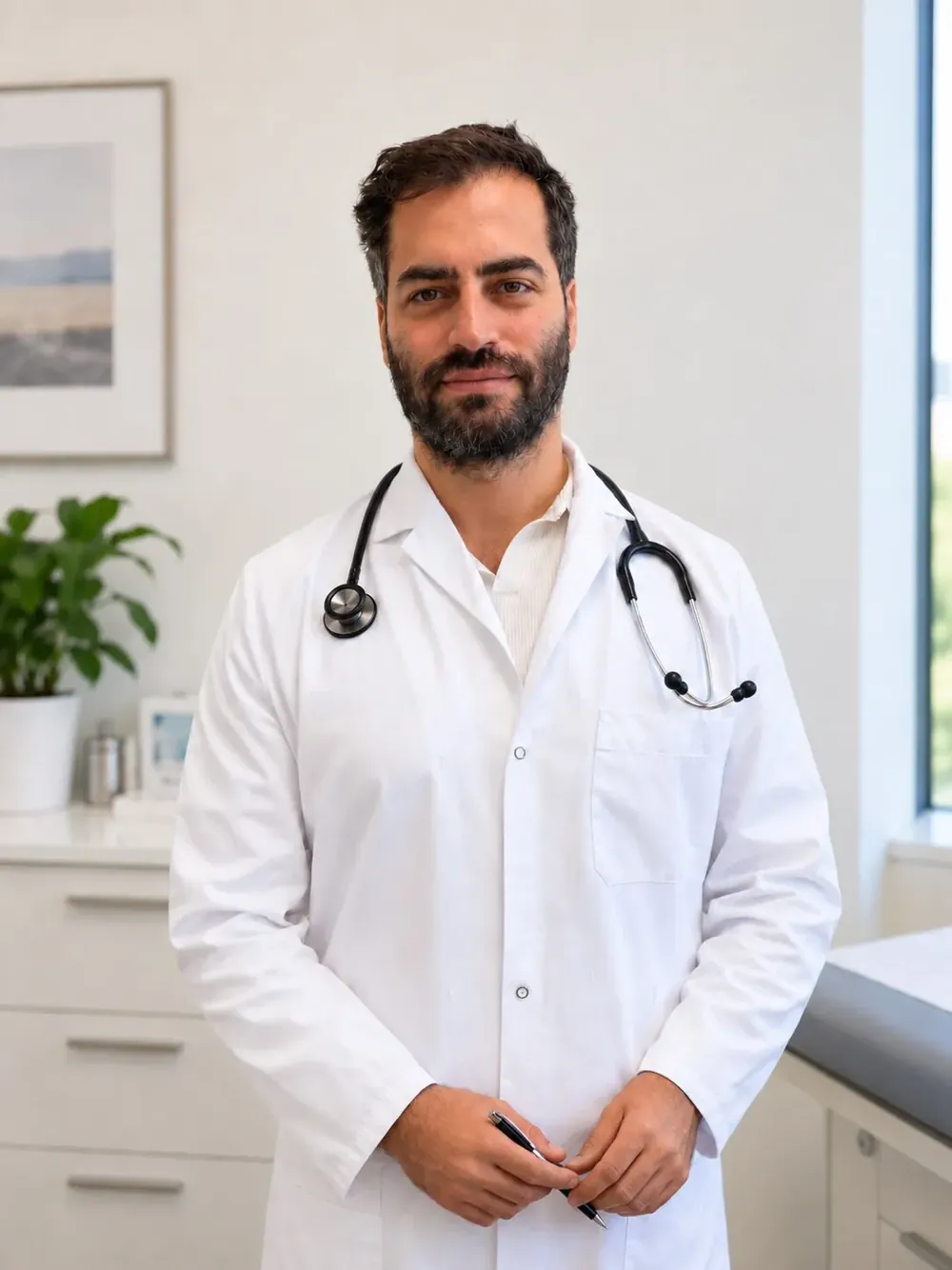
Dr. Moustafa Kassar – Medical Director, Zurich

Dr. Moustafa Kassar

Medical DirectorZurich

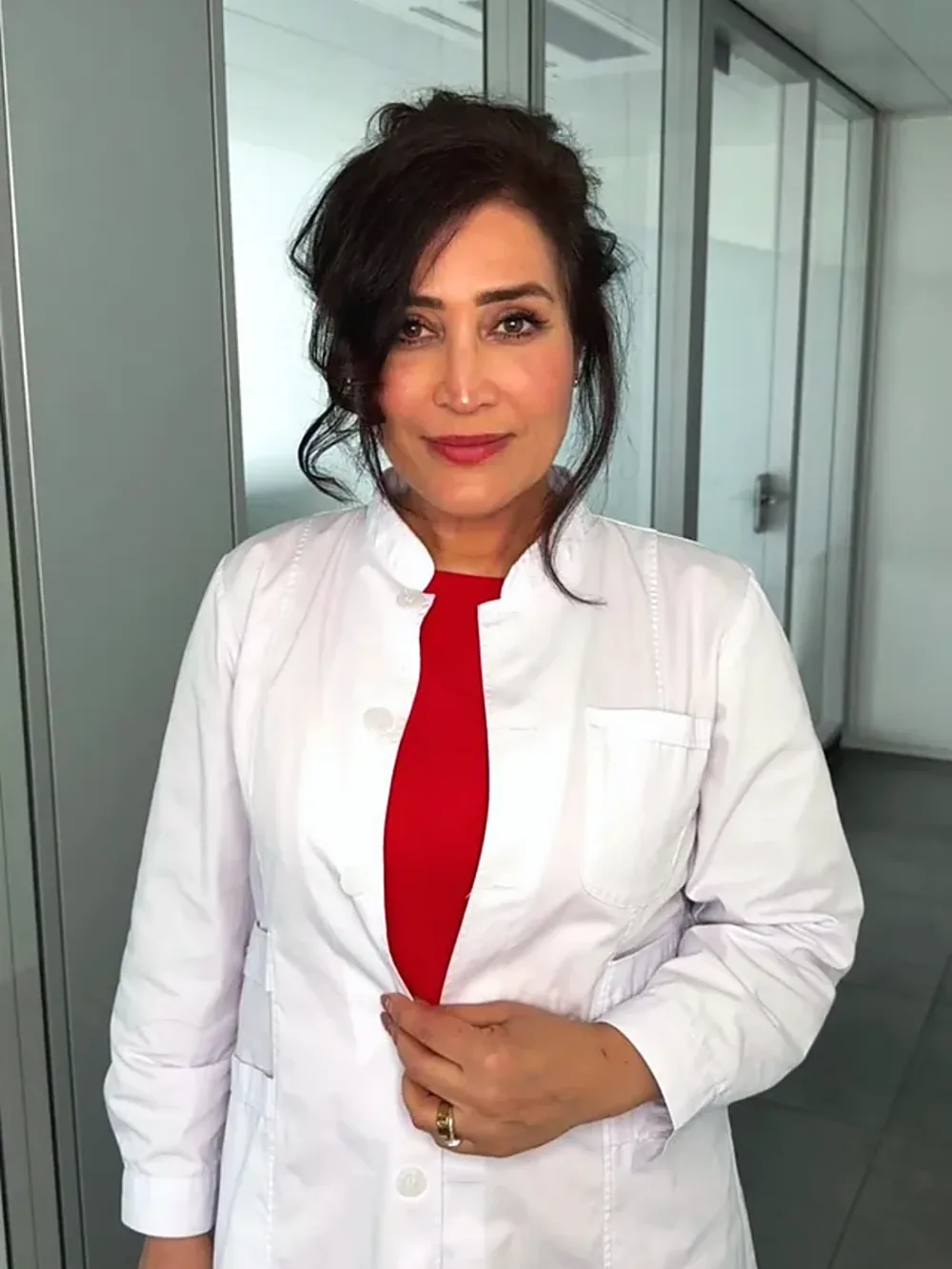
Dr. Sabrina Tahery – Medical Director, Oftringen

Dr. Sabrina Tahery

Medical DirectorOftringen

A small, dedicated team

Extraction, graft sorting and implantation are carried out by a well-coordinated team – with no rotating staff.

Our own clinic

The procedure takes place in our own modern clinic, under the care of the Swiss Hair Life medical team.

FUE method with sapphire blades

Individual hair follicles are extracted from the back of the head and implanted into fine channels in the recipient area.

Support through to your follow-up

The same contacts from your consultation through to your follow-up appointments in Zurich or Oftringen.

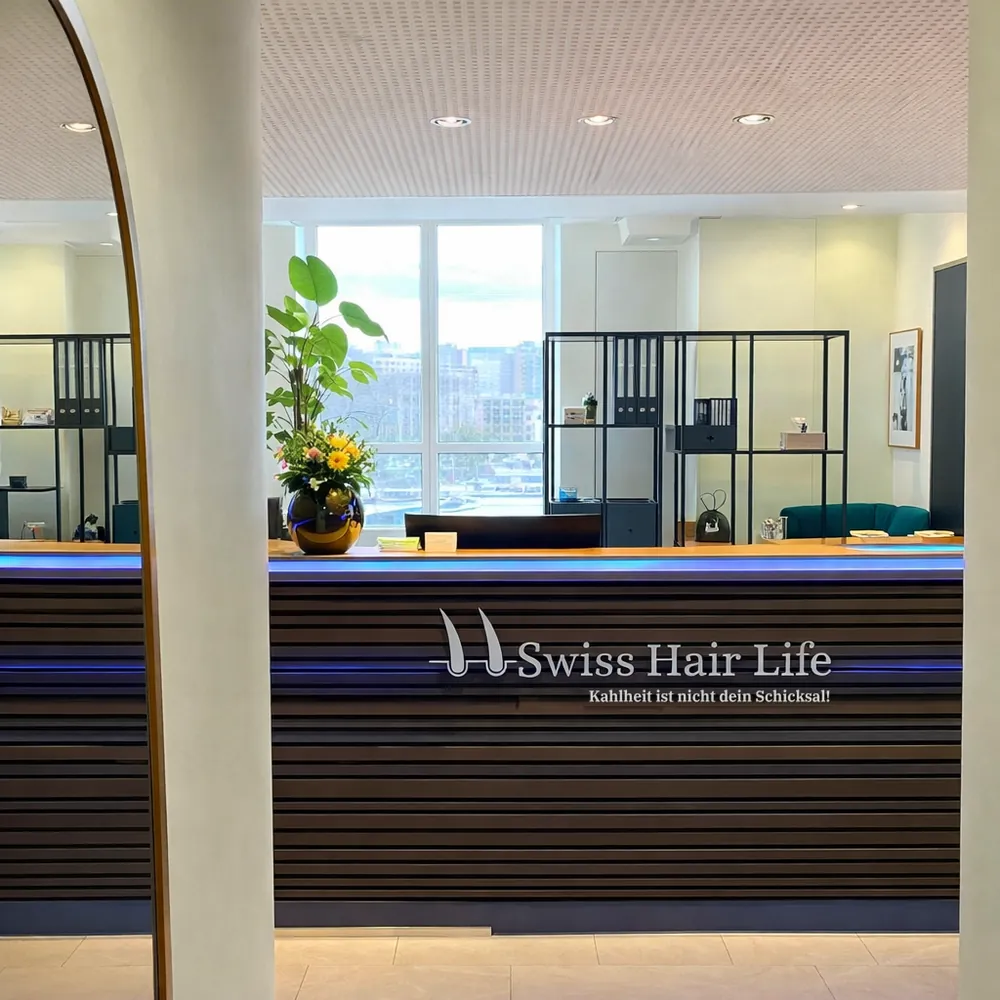
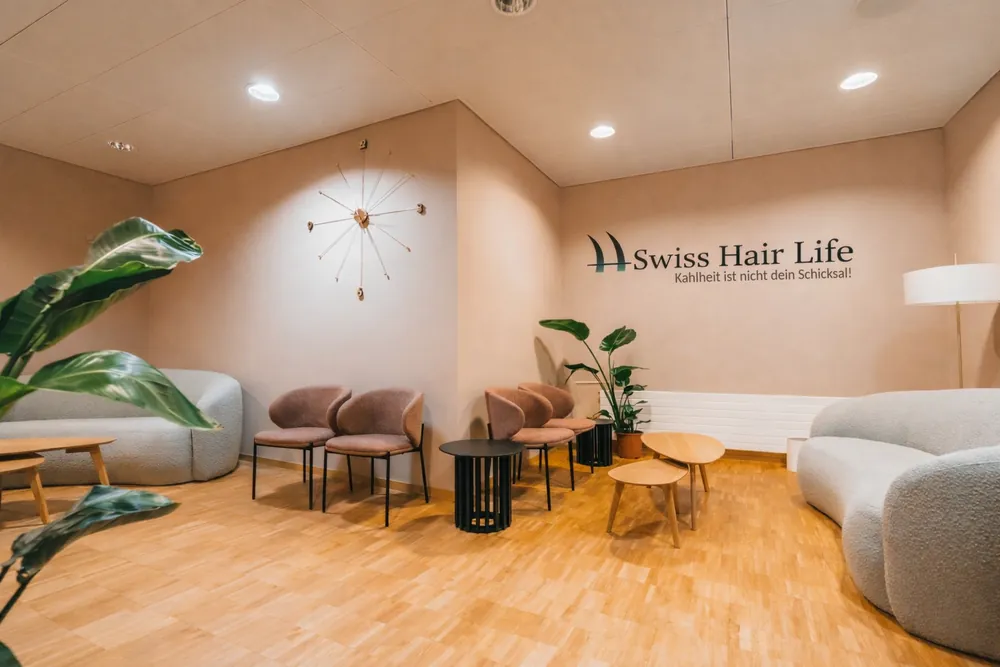
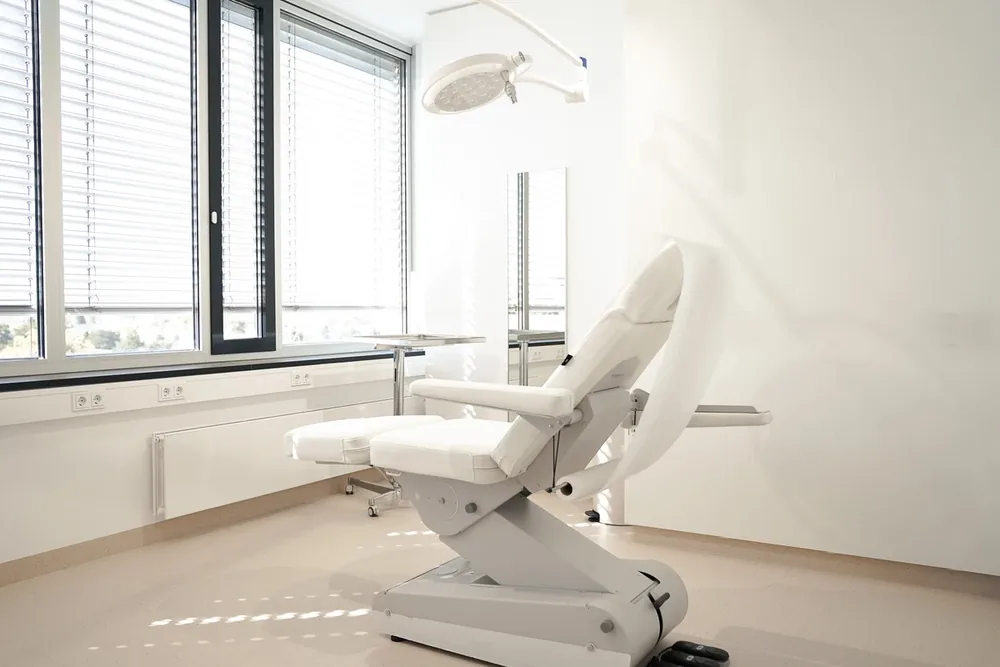
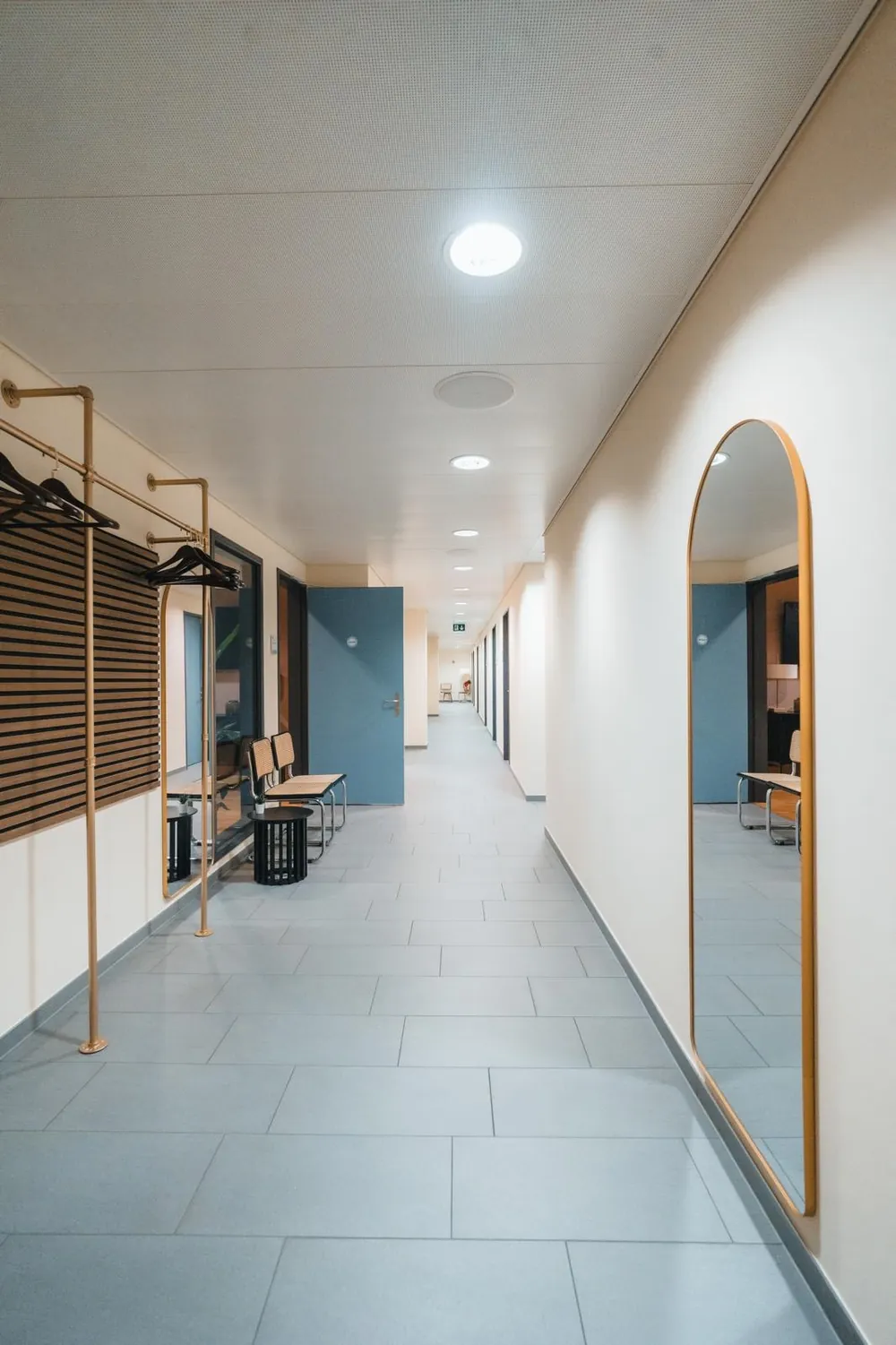
Inside our Zurich location

Mürtschenstrasse 26, 8048 Zürich

Reception – Swiss Hair Life Zurich
Reception
Waiting area – Swiss Hair Life Zurich
Waiting area
Treatment room – Swiss Hair Life Zurich
Treatment room
Hallway – Swiss Hair Life Zurich
Hallway
Google reviews

What our patients say

«I had several consultations in Switzerland and deliberately decided against Turkey. Safety, aftercare and having contact persons in Switzerland were extremely important to me. […] The hairline looks extremely natural, the density is great and you absolutely can’t tell it was transplanted.»
DDaniele A.Google review· Translated from GermanView on Google
«I also considered having the transplant done abroad, but decided against it. The price advantage doesn’t outweigh it, because you get completely different follow-up care in Switzerland […] The pain is not bad […] The only thing I regret is not doing it sooner.»
GGabriel M.Google review· Translated from GermanView on Google
Locations

Hair transplant in Zurich and Aargau

Our clinics are in Zurich-Altstetten and in Oftringen. Both are easy to reach from all over German-speaking Switzerland, for example from Zurich, Winterthur, Baden, Aarau, Olten, Lucerne, Bern and Basel. Consultation, procedure and follow-up appointments take place in the same place.

Frequently asked questions about hair transplants

Cost, procedure, healing and results – answered briefly.

How much does a hair transplant cost in Switzerland?

A hair transplant at Swiss Hair Life costs between CHF 5’900.– and CHF 12’900.–. The price depends on the number of grafts and is a fixed price; consultation, procedure, aftercare and all follow-up appointments are included.

Is the consultation free?

Yes, the consultation at Swiss Hair Life is free and without obligation.

Does health insurance pay for a hair transplant?

As a rule, no. A hair transplant is usually considered an aesthetic procedure that basic health insurance does not cover. You can, however, pay for the treatment interest-free in instalments from CHF 250.– per month.

How many grafts do I need?

That depends on the area – usually up to 1’500 grafts for receding temples or the crown, up to 2’800 or 3’800 for larger areas and up to 6’000 for advanced hair loss. More grafts are not automatically better; we set the exact number after the hair analysis, matched to your donor area.

What is the graft survival rate?

In an internal evaluation of 568 patients over two years, the graft survival rate of the transplanted grafts at Swiss Hair Life was 98%. The individual result can differ; it depends, among other things, on the donor area, the quality of the grafts, healing and aftercare.

How long does a hair transplant take?

Depending on the extent and number of grafts, a hair transplant at Swiss Hair Life usually takes about 6 to 8 hours. For very large areas, we spread the treatment over two sessions.

Is a hair transplant painful?

The procedure is carried out under local anaesthesia; you are awake. How you experience the procedure and the days afterwards varies from person to person. We discuss the procedure and possible discomfort openly in the consultation.

What should I bear in mind before and after a hair transplant?

Before the hair transplant, please avoid alcohol and nicotine. Only stop blood-thinning medication after consulting your doctor. After the treatment, it is important to follow the aftercare instructions and to care for your scalp carefully.

When can I go back to work?

That depends on your job and how you heal. Redness and crusts are still visible in the first week; physical work needs more time. In the consultation we plan the date so that it fits in with your everyday life. More on this in the guide Healing after a hair transplant.

When can I do sport again?

Light exercise is usually possible again soon; you should pause strenuous sport for a few weeks. You will find the exact timing for your sport in your aftercare instructions. What happens in the weeks after the procedure is described in the guide Healing day by day.

When will I see the result?

In many patients, the final result can be assessed after about 12 to 18 months. The new hair starts to grow after 3 to 4 months, and the difference is usually clearly visible after 6 to 9 months.

Is the result permanent?

Transplanted hair from a suitable donor area can keep growing in the long term. The hair follicles in the classic donor area at the back of the head are usually much less sensitive to the hormone DHT than the hair in the typical areas of hereditary hair loss. Your own, non-transplanted hair can, however, keep thinning, which is why we plan for the long term.

Is a hair transplant also possible for women?

Yes, for example with a high forehead or clearly defined bald patches. In women, we first clarify the cause of the hair loss. Depending on the findings, a hair transplant, PRP hair treatment or first a further medical assessment can make sense.

Hair transplant in Switzerland or abroad?

At Swiss Hair Life, consultation, procedure and all follow-up appointments take place in Switzerland, with the same contacts throughout. Abroad, the treatment price is often lower; depending on the provider, however, travel, hotel and days off work are added, and follow-up appointments mean another trip. More on this in the comparison of Switzerland and Turkey.

What are the risks of a hair transplant?

Swelling, redness and crusts are common in the first few days; temporary numbness and temporary hair shedding are possible. Inflammation is rare. We discuss all risks openly with you before the treatment.

Am I suitable for a hair transplant?

We clarify this in the free hair analysis. We check your donor area, the cause and course of your hair loss, your age and your expectations. If the conditions are not right, we tell you openly and advise you on alternatives.

Who performs the hair transplant?

The Swiss Hair Life medical team under the medical direction of Dr. Moustafa Kassar in Zurich and Dr. Sabrina Tahery in Oftringen, together with a dedicated, well-coordinated team.

References and practice values

The medical statements on this page have been reviewed and approved by Dr. Sabrina Tahery and Dr. Moustafa Kassar. The graft survival rate of 98% comes from an internal evaluation of 568 patients over two years; channel size, first healing phase and duration of the treatment are typical values from our practice. General statements are based on, among others:

Free, no obligation, in 2 minutes

Don't start with uncertainty.
Start with clarity.

Find out in a free consultation what's possible in your case – a hair transplant from CHF 5’900.– or from CHF 250.– per month*.

Free consultation, no obligation
Treatment in Switzerland
From CHF 250.– per month*
Zurich or Oftringen
info@swisshairlife.ch

* Interest-free financing, subject to a credit check and approval by our financing partner. Terms and calculation example