
Possible causes of hair loss – a comprehensive guide
Published Last updated Content: Swiss Hair Life editorial team
Medically reviewed by Dr. Sabrina Tahery (Medical Lead Oftringen) and Dr. Moustafa Kassar (Medical Lead Zurich) · Medically updated
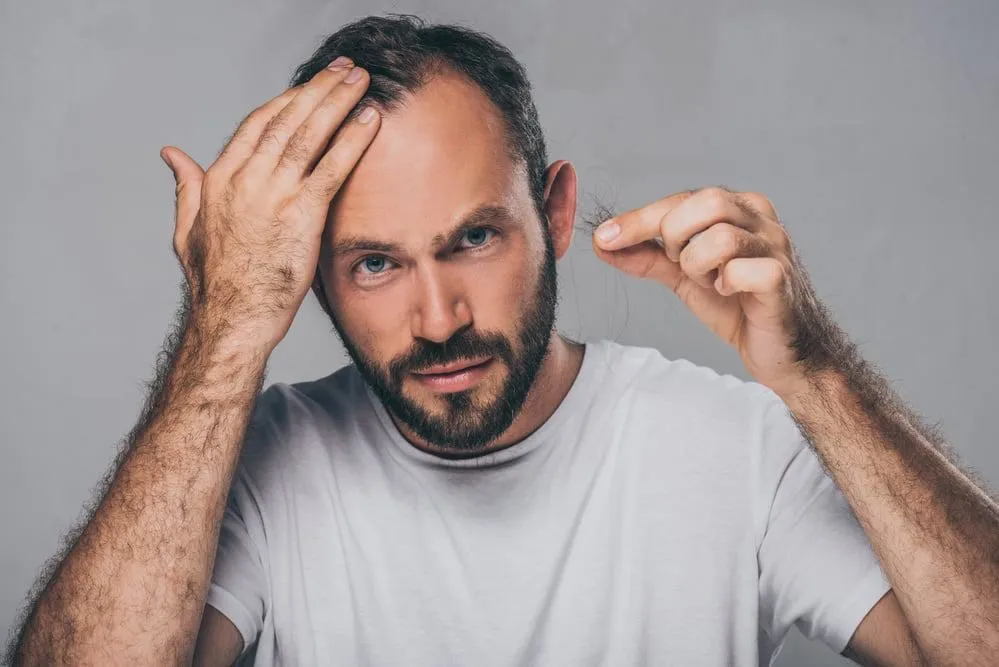
Hair loss is more than a cosmetic problem – it affects our self-image and how we present ourselves to the world. At Swiss Hair Life, we understand the emotional and physical importance of full, healthy hair. In this guide, we explain what can cause hair loss, how you can recognise each cause and when it makes sense to have it checked.
Short answer: The most common cause of hair loss is a hereditary predisposition, in men and women alike. Stress, illness, giving birth, iron deficiency, thyroid disease, medication, pulling on the hair or an autoimmune reaction can also trigger hair loss. The pattern usually reveals the cause: where, how quickly and since when the hair has been falling out.
Key points at a glance
- Losing 50 to 100 hairs a day is normal. To find out when it becomes a concern, read our article Hair loss: normal or a cause for concern?
- Hereditary hair loss develops slowly and follows a typical pattern: in men at the temples and the crown, in women more often along the parting.
- Diffuse hair loss after stress, fever, surgery or giving birth often only starts two to three months after the trigger and is frequently temporary.
- Sudden, patchy or painful hair loss should be checked by a doctor.
- The right treatment depends on the cause. That is why diagnosis comes first.
Possible causes of hair loss
Hair loss can have many causes, from genetic factors to your lifestyle. Often, several factors work together. The overview below shows the most common forms and how to recognise them.
| Cause | Typical pattern | What you can do |
|---|---|---|
| Hereditary predisposition (androgenetic alopecia) | Progresses slowly. Men: temples and crown. Women: a widening parting | Have it checked early; depending on the stage, medication, PRP (platelet-rich plasma) treatment or a hair transplant |
| Stress, fever, surgery, crash diet (diffuse hair loss) | Hair falls out all over the head, often two to three months after the trigger | Identify the trigger; the hair often grows back on its own |
| Giving birth | Increased hair loss a few months after delivery | Usually temporary; have it checked if it lasts a long time |
| Iron deficiency | Rather diffuse, more common in women before the menopause | Have your blood tested by a doctor; do not take iron just in case |
| Thyroid disease | Diffuse, often with other symptoms such as tiredness or changes in weight | Have it checked by your GP |
| Hormones, for example the menopause or stopping the pill | Diffuse or similar to hereditary hair loss | Have it checked by a doctor or gynaecologist |
| Medication and cancer treatments | Depends on the active substance | Never stop taking medication on your own; discuss it with your doctor |
| Anabolic steroids and testosterone | Same pattern as hereditary hair loss | See Anabolic steroids, testosterone and hair loss |
| Alopecia areata | Round, smooth bald patches, often appearing suddenly | Have it checked by a dermatologist |
| Pulling on the hair | At the forehead and temples with tightly tied hairstyles | Change your hairstyle; usually reversible if recognised early |
| Inflammation and scarring of the scalp | Redness, scaling, burning or itching; hair follicles can be permanently destroyed | Have it checked by a dermatologist promptly |
Hereditary hair loss – the most common cause
In hereditary hair loss, certain hair follicles are sensitive to the hormone dihydrotestosterone (DHT). Over time they shrink, and the hairs become thinner and shorter until they eventually fall out. The hair at the back of the head is usually far less sensitive, which is why this area is often preserved even when hair loss is advanced.
Hereditary hair loss progresses gradually and usually does not stop on its own without treatment. The European S3 guideline names topical minoxidil for women and men and finasteride for men as effective medications; finasteride is available on prescription only. Find out more in our article Can hereditary hair loss be treated?
Diffuse hair loss after stress, illness or giving birth
A high fever, surgery, severe stress, giving birth or a strict diet can send many hairs into the resting phase at the same time. They only fall out two to three months later, when the trigger has often been forgotten. Specialists call this telogen effluvium. Once the trigger has passed, the hair usually grows back within a few months.
Iron deficiency and the thyroid
Iron deficiency and an overactive or underactive thyroid are often investigated as causes of diffuse hair loss. Whether iron deficiency without anaemia triggers hair loss has not been conclusively established. Have your blood levels measured by a doctor before you take any supplements.
Hair loss in women
In women, several causes often come together: a hereditary predisposition that shows mainly along the parting, hormonal changes after giving birth or during the menopause, iron deficiency or thyroid disease. That is why a thorough diagnosis is particularly important for women before any treatment is planned.
Alopecia areata and scarring hair loss
In alopecia areata, the immune system attacks the hair follicles, leaving round, smooth bald patches. In scarring forms, inflammation destroys the hair follicles permanently. Both forms need dermatological treatment. A hair transplant can only be considered here, if at all, during a calm, stable phase.
When should you have hair loss checked?
Have your hair loss checked by a doctor if:
- your hair falls out suddenly or in large amounts,
- round bald patches appear,
- your scalp is red, scaly, burning or painful,
- the hair loss continues for several months,
- other symptoms appear, for example tiredness or changes in weight,
- children are affected.
Your first point of contact is your GP or a dermatologist, who can test your blood if needed.
The consultation
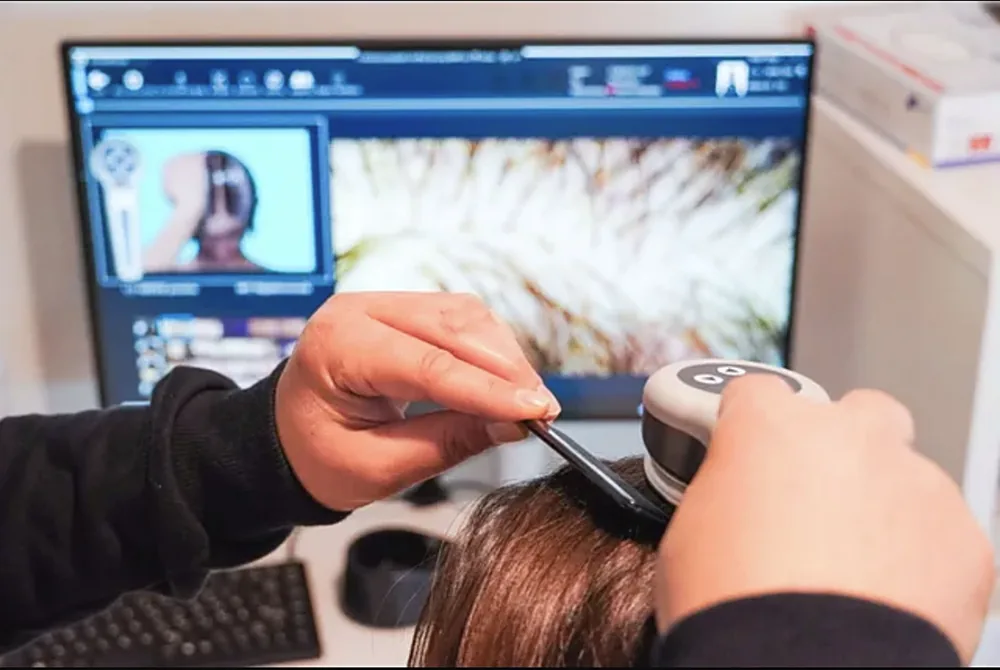
With us, you are the focus. In the free hair analysis, we also examine your scalp using trichoscopy, a highly magnified image of the hair and hair follicles. This shows us whether follicles are shrinking, where the hair is thinning and how much donor hair is available. We tell you openly which treatment is an option and when further medical investigation makes sense first. The consultation is free of charge.
Start your free hair analysis · Book a consultation
Which treatment suits which cause?
- Hereditary hair loss with bald areas: A hair transplant moves your own hair follicles from the back of the head to where hair no longer grows.
- Thinning hair with follicles still present: PRP treatment or micrografting can support the existing follicles, and medication prescribed by a doctor can complement them.
- Diffuse, temporary hair loss: Treating the trigger comes first; a transplant is usually not necessary.
- Alopecia areata or scarring hair loss: Dermatological treatment.
The treatment: how a hair transplant works
If hereditary hair loss has led to bald areas, a hair transplant can make sense. We work exclusively with the Sapphire FUE method, using sapphire blades.
The FUE method: fine details and benefits
- Precise extraction: Individual hair follicles are removed from the back of the head with fine hollow needles.
- No visible scars: Because individual follicles are removed, no visible scars remain.
- Natural hairline: The hairline is planned individually to suit your face and age.
We explain the procedure, prices and recovery in detail on our hair transplant page. To find out what happens to the new hair after the procedure, read the article Can transplanted hair fall out again?
PRP treatment as a complement
PRP treatment with platelet-rich plasma can be used as a complement, before or after a hair transplant or for thinning hair. It can support the regeneration of the scalp and existing hair growth. It does not create new hair follicles.
Risks
Like any medical procedure, a hair transplant carries risks, for example swelling, redness, scabs or temporary numbness. We discuss them openly with you in the free consultation.
Frequently asked questions
What is the most common cause of hair loss?
A hereditary predisposition, in men and in women. It shows a typical pattern that develops over years.
Can stress cause hair loss?
Yes. Severe stress can trigger diffuse hair loss, which is often only noticed two to three months later. Once the strain has passed, the hair usually grows back.
Will my hair grow back on its own?
That depends on the cause. After stress, illness or giving birth, it often grows back on its own. Hereditary hair loss usually continues to progress without treatment, and in scarring forms the hair follicles are permanently destroyed.
Which blood tests make sense for hair loss?
Iron levels and thyroid levels are often tested, and others depending on the situation. Your doctor decides which tests make sense.
Conclusion
Hair loss has many possible causes. The most common is a hereditary predisposition, but stress, hormones, deficiencies or illnesses can also be behind it. Once you know the cause, you can take targeted action. At Swiss Hair Life, we take the time for this: in the free hair analysis in Zurich, in Oftringen or online with photos.
References
- Kanti V, Messenger A, Dobos G, et al. Evidence-based (S3) guideline for the treatment of androgenetic alopecia in women and in men – short version. J Eur Acad Dermatol Venereol. 2018;32(1):11–22.
- Harrison S, Bergfeld W. Diffuse hair loss: its triggers and management. Cleve Clin J Med. 2009;76(6):361–367.
- Rebora A. Telogen effluvium: a comprehensive review. Clin Cosmet Investig Dermatol. 2019.
- Trost LB, Bergfeld WF, Calogeras E. The diagnosis and treatment of iron deficiency and its potential relationship to hair loss. J Am Acad Dermatol. 2006;54(5):824–844.
- Austrian health portal (in German): Haarausfall